
4 Types of Headache Comparison Guide | One Spine KL & PJ

4 Types of Headache Comparison Guide: Tension, Migraine, TMJ and Sinus Headaches
The 4 common types of headache are tension headache, migraine, TMJ headache, and sinus headache. At One Spine Chiropractic & Physiotherapy, we help patients in KL, PJ, and TTDI understand their headache pattern, check red flags, and assess whether neck movement, posture, jaw tension, or muscle tightness may be contributing.
This guide is educational and not a diagnosis. We explain common headache patterns, safety signs, and when it may be suitable to book an assessment with our team.
What Are the 4 Common Types of Headache?
The 4 common types of headache are tension headache, migraine, TMJ headache, and sinus headache. Each type may feel different because the source can involve muscle tension, nerve sensitivity, jaw strain, sinus inflammation, posture stress, or migraine-related triggers.
For many working adults, desk workers, drivers, and students in KL, PJ, and TTDI, headaches may also be influenced by long sitting, phone posture, dehydration, poor sleep, neck stiffness, and shoulder tension.
Which Headache Pattern May Sound Familiar?
This comparison can help you describe your symptoms more clearly before an assessment. It should not be used to self-diagnose because headache symptoms can overlap.
| Headache Type | Common Feeling | Duration Pattern | Common Triggers or Causes | When to Be More Careful |
|---|---|---|---|---|
| Tension headache | Tight, squeezing pressure on both sides | 30 minutes to 1 week | Muscle tension, stress, tiredness, dehydration, loud noise, poor posture | If pain becomes sudden, severe, or unusual |
| Migraine | One-sided pulsating or throbbing pain | 4 to 72 hours | Emotional, hormonal, dietary, environmental, medicinal, or fatigue-related triggers | If symptoms are new, severe, or neurological |
| TMJ headache | Dull ache at temples or in front of ears | May improve with rest, but duration varies | Teeth grinding, jaw clenching, TMJ tension | If bite issues, infection, locking, or severe jaw pain is present |
| Sinus headache | Deep constant pain in cheeks, forehead, or nose bridge | Often short-term, but depends on the cause | Sinus inflammation, infection, or allergy | If fever, thick discharge, persistent congestion, or worsening facial pain occurs |
Safety Screening Comes Before Treatment
Before deciding whether chiropractic or physiotherapy care is suitable, our team checks for red flags first. This is important because not every headache is caused by neck tension, posture, or muscle tightness.
Seek immediate medical attention if your headache is:
- Sudden and extremely severe, especially the “worst headache of your life”
- Accompanied by weakness, numbness, vision changes, confusion, or speech difficulties
- Following a head injury
- Associated with fever or loss of consciousness
- Rapidly worsening or very different from your usual headache
If symptoms suggest infection, neurological involvement, trauma, dental problems, or another medical concern, we may recommend seeing a doctor or dentist before starting musculoskeletal care.
1. Tension Headache
A tension headache usually feels like bilateral tightness, pressure, or a squeezing sensation around the forehead, temples, or back of the head. It may last from 30 minutes to 1 week and is often linked to muscle tension, stress, tiredness, dehydration, loud noise, neck stiffness, and shoulder tightness.
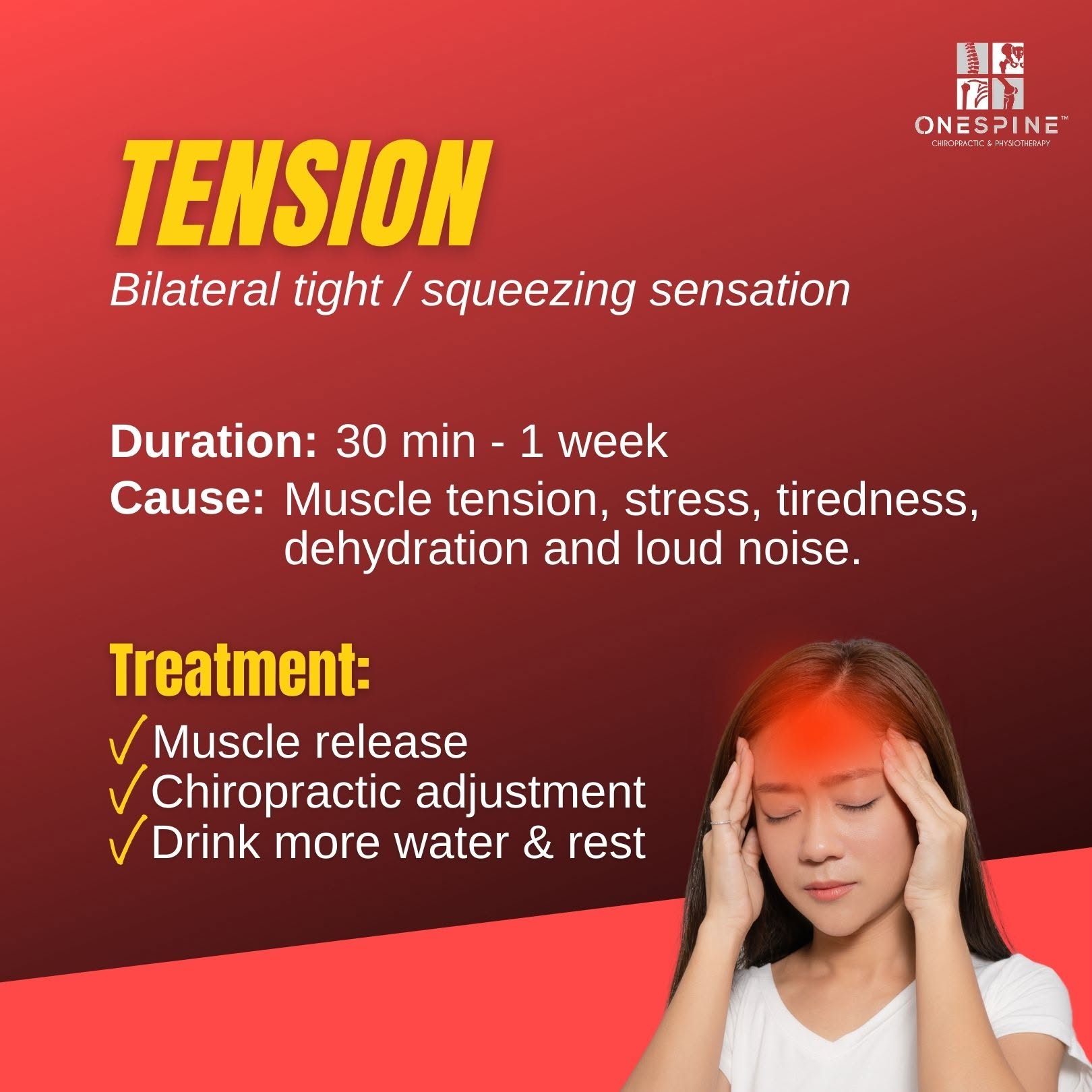
Tension headaches are common in people who sit for long hours, work at a computer, drive frequently, or carry stress in the neck and shoulders.
Common signs include:
- Tight or squeezing pain on both sides of the head
- Pressure around the forehead or temples
- Neck, shoulder, or upper back tightness
- Headache after stress, fatigue, dehydration, or poor posture
- Discomfort that may improve with rest, hydration, and muscle relaxation
Our assessment may include checking muscle tightness and trigger points, neck pain and stiffness, and poor posture and rounded shoulders.
2. Migraine
A migraine is usually a moderate to severe pulsating headache, often on one side of the head. It may last 4 to 72 hours and may come with sensitivity to light and sound, nausea, vomiting, visual aura, and fatigue.
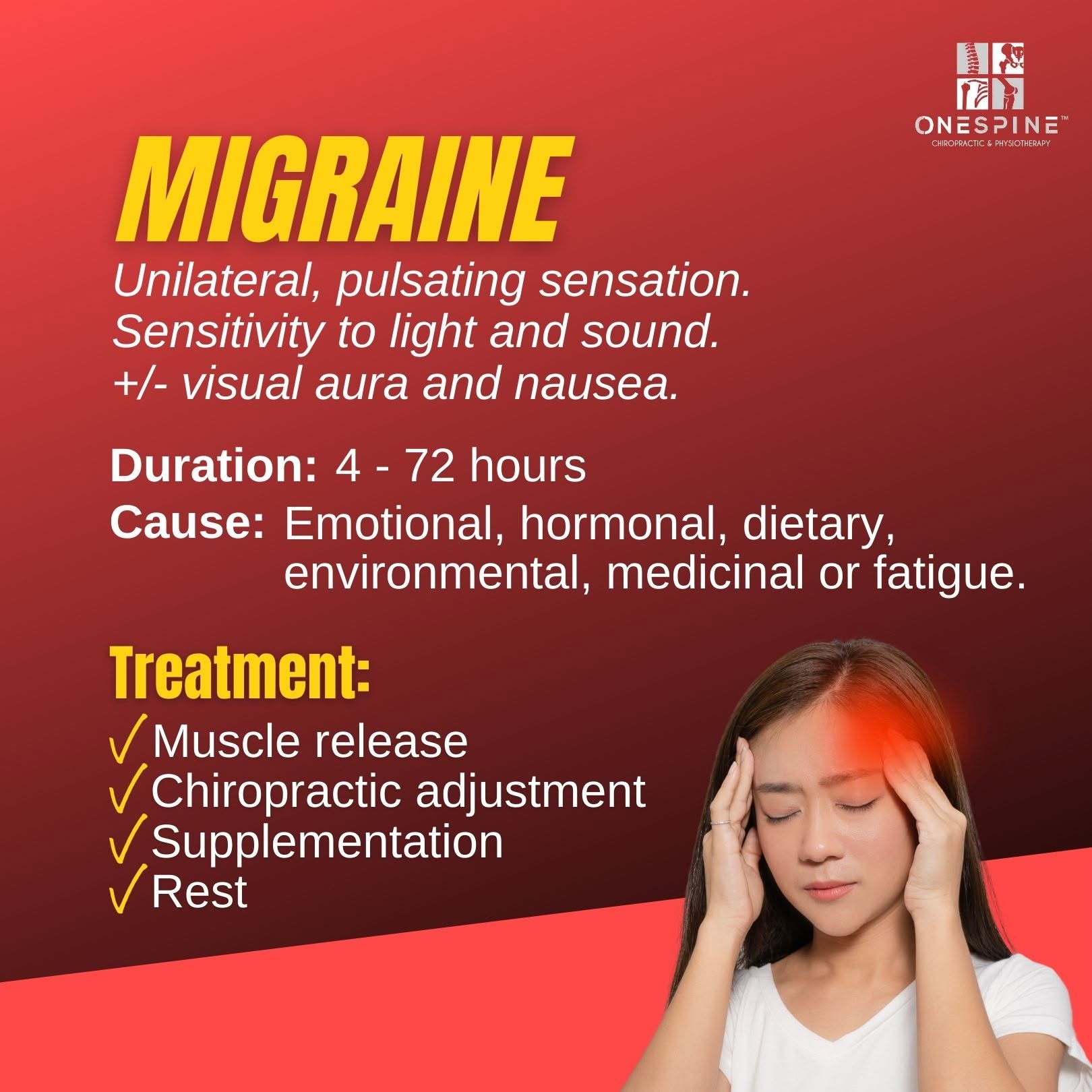
Migraine is not just a normal headache. Triggers may include emotional stress, hormonal changes, diet, environmental exposure, medication factors, poor sleep, fatigue, and body tension.
Common signs include:
- One-sided throbbing or pulsating pain
- Sensitivity to light or sound
- Nausea or vomiting
- Visual aura in some cases
- Pain lasting several hours to several days
- Headache that worsens with movement
Our care does not cure migraine. However, we may help manage physical contributing factors such as neck stiffness, poor posture, muscle tension, and stress-related body tension when these are part of the headache pattern.
3. TMJ Headache
A TMJ headache is related to the temporomandibular joint, which is the jaw joint. It often feels like a tight, dull ache in the temples or in front of the ears, and it may be one-sided.
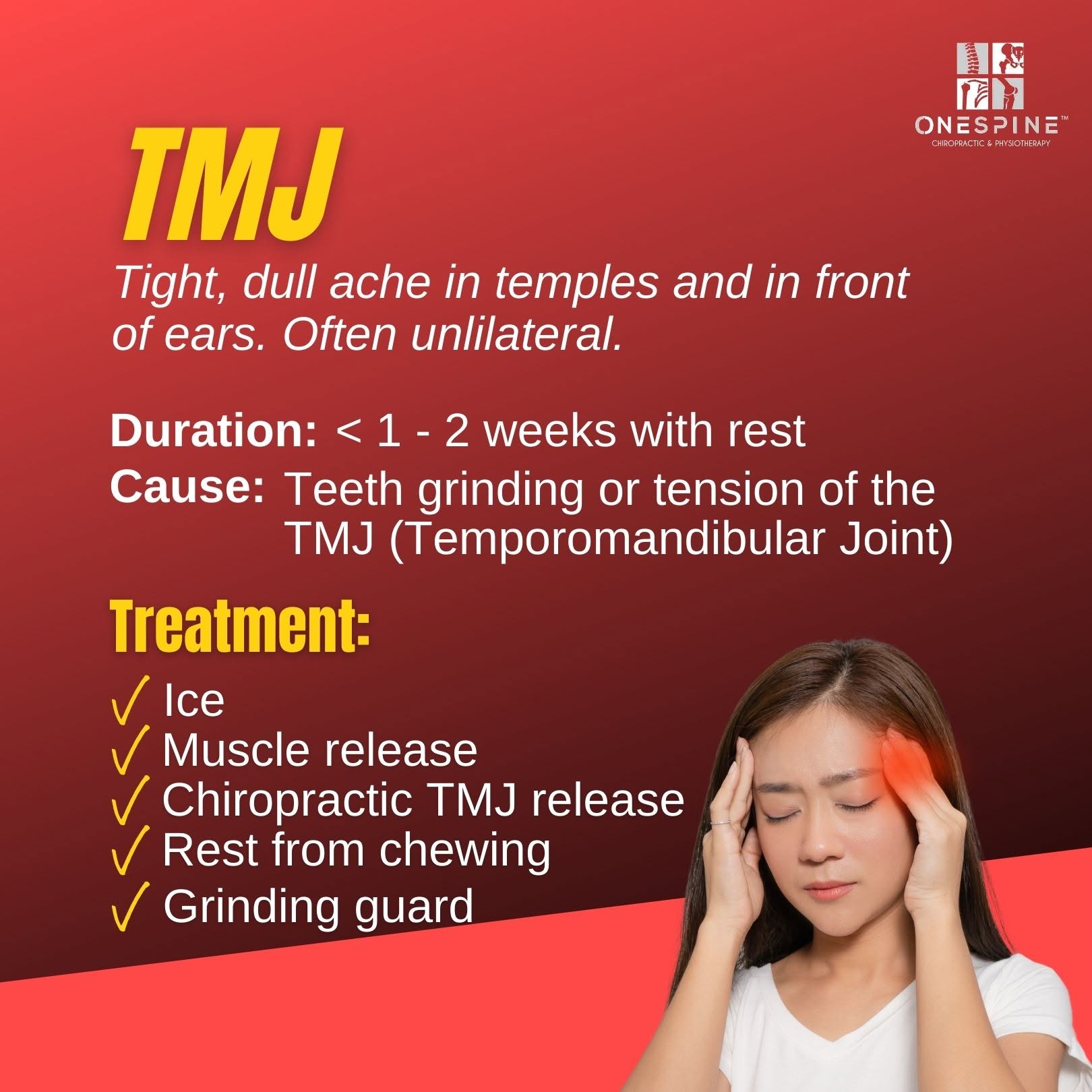
TMJ headache duration varies depending on the cause, jaw loading, teeth grinding, bite-related issues, and muscle tension. Some people may improve with rest and reduced jaw strain, while others may need dental or medical input.
Common signs include:
- Temple pain or dull ache near the ears
- Jaw tightness or soreness
- Pain that worsens with chewing
- Teeth grinding or jaw clenching
- Clicking, stiffness, or discomfort when opening the mouth
- Facial, ear, or head discomfort on one side
Our team may assess jaw movement, neck posture, and muscle tightness around the jaw, neck, shoulders, and upper back. We may refer to a dentist or doctor when jaw grinding, bite issues, infection, severe locking, or non-musculoskeletal signs are suspected.
4. Sinus Headache
A sinus headache usually causes deep, constant pain around the cheekbones, forehead, bridge of the nose, eyes, or face. It is often linked to sinus inflammation, infection, or allergic reaction, but the duration can vary depending on the cause.

Sinus headache symptoms often include nasal congestion, facial pressure, thick nasal discharge, or worsening pressure when bending forward. However, some sinus-like headaches may actually be migraine, so persistent or recurring symptoms should be medically assessed.
Common signs include:
- Deep pain in the forehead, cheeks, nose bridge, or around the eyes
- Facial pressure or fullness
- Blocked or congested nose
- Thick nasal discharge
- Pain that worsens when bending forward
- Possible fever or infection symptoms
Chiropractic and physiotherapy do not directly treat sinus infection. However, we may help reduce neck, facial, and upper body muscle tension that may worsen discomfort while recommending medical care when sinus symptoms suggest infection or persistent congestion.
Our One Spine Headache Assessment Framework
Our headache care process follows a structured framework: identify the headache pattern, screen for red flags, assess neck, jaw, posture, and muscles, match the care plan, then track response. This helps us decide whether chiropractic care, physiotherapy, rehabilitation, or referral is the safer next step.
1. Consultation and Headache Pattern Review
We first ask about the headache location, feeling, duration, triggers, frequency, lifestyle habits, work posture, sleep, hydration, jaw clenching, and past injury history. This helps us understand whether the pattern sounds more like tension headache, migraine, TMJ headache, sinus headache, or another concern.
2. Red Flag and Suitability Screening
We check for warning signs such as sudden severe headache, neurological symptoms, fever, trauma, fainting, unusual headache changes, and signs that may need medical assessment. Safety screening helps us avoid treating symptoms that require urgent medical care.
3. Neck, Jaw, Posture, and Muscle Assessment
We may assess neck movement, spinal alignment, jaw movement, shoulder tension, upper back mobility, muscle tightness, breathing habits, and posture control. This is especially useful for desk workers, drivers, students, and working adults who experience repeated neck and shoulder strain.
4. Personalized Care Plan or Referral
If the headache appears related to musculoskeletal factors, care may include chiropractic treatment, physiotherapy, soft tissue therapy, posture correction, mobility work, strengthening, and home advice. If symptoms suggest sinus infection, dental issues, neurological signs, or non-musculoskeletal causes, we may refer for medical or dental evaluation.
Practitioner Qualification and Care Standards
Our team’s assessment-led approach is supported by chiropractic and physiotherapy training, clinical screening, and safe care planning. We do not treat every headache the same way because the right next step depends on symptoms, red flags, physical findings, and whether the headache appears musculoskeletal or medical in nature.

How Our Chiropractic and Physiotherapy Team May Help
Our team may support headache management when physical triggers such as poor posture, neck stiffness, muscle tension, jaw strain, and movement imbalance are involved. The goal is not only short-term relief, but also better movement, better posture awareness, and better control of recurring triggers.
Depending on the assessment, we may use:
- Chiropractic care when appropriate
- Physiotherapy treatment
- Soft tissue therapy
- Neck and upper back mobility work
- Jaw-related muscle release and exercises
- Posture correction and ergonomic advice
- Stretching and strengthening exercises
- Home care advice for hydration, rest, and activity pacing
For broader reading, we recommend our guide on common causes of headaches. This article focuses on headache type comparison, while that page explains headache causes in a broader way.
Ready to Check Your Headache Pattern Safely?
If your headache keeps returning, our team can assess your neck movement, posture, jaw tension, muscle tightness, and red flags before deciding whether chiropractic or physiotherapy care is suitable.
Book an assessment with our team in KL, PJ, or TTDI so we can help you understand the likely physical triggers and recommend a safer next step.
Book an AssessmentFAQ
Conclusion
In summary, the 4 types of headache are tension headache, migraine, TMJ headache, and sinus headache. By comparing the headache pattern and assessing red flags, neck movement, posture, jaw tension, and muscle tightness, our team in KL, PJ, and TTDI can help decide whether chiropractic care, physiotherapy, rehabilitation, or referral is the most suitable next step.
Jun 16,2026